
Most small business websites don’t stand out because they were never built to.
They were built to exist. To tick a box. Someone paid someone, a site got made, and it sits there quietly failing to earn its keep.
Standing out isn’t magic. It’s eight plain things done properly.
Pick a Name People Remember
Your domain is the thing people type into their phone at a red light. Short. Easy to say. Easy to spell over a pub table.
If your bloke at the bar can’t remember it by the time he gets home, it’s the wrong name. Skip the dashes. Skip the numbers. Skip the cute spelling.
Your brand or your town plus your trade. That’s it. Nothing fancy.
If your bloke at the bar can’t remember the name by the time he gets home, it’s the wrong name.
Build for the Phone First
Seven in ten people looking for a local trade are on a phone. Often walking. Often with one hand on a coffee.
If your site looks fine on a desktop but breaks on a phone, you’ve built it backwards. Pull out your own phone. Open your site. If you have to pinch and zoom to read anything, the job’s not done.
This is the bit most web designers still get wrong. They build on a big screen and test on a big screen. The customer never sees it on a big screen.
Put Your Reviews on Google
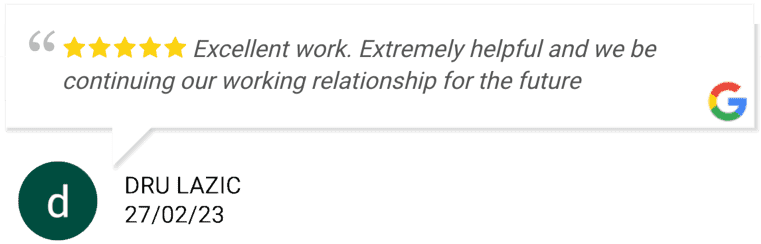
Reviews are the single biggest trust-builder on the internet. Not a shiny logo. Not a stock photo of a handshake. Real reviews from real locals.
Claim your Google Business Profile. Ask every customer who liked the job. Reply to every review, good or bad.
Fifty real reviews on Google will sell more work than a fifty-thousand-dollar ad campaign. It costs nothing. It just takes asking.
Write Like a Person, Not a Brochure
Your content is what Google reads and what customers read. Write it for the customer. Google follows.
Drop the corporate lines. “Industry-leading solutions” doesn’t mean anything to a mum searching for a plumber at 7pm. “We fix blocked drains in Preston within two hours” does.
Say what you do. Say where you do it. Say what it costs, if you can. Specific beats clever, every time.
Use Photos That Look Like Your Business
Stock photos are lazy. Customers smell them from a mile off.
Pay a photographer for one hour. Get twenty shots of the real shop, the real van, the real team. Or use your phone. A genuine phone photo of your actual work beats a glossy stock image of a handshake every time.
Show the work. Show the before and after. Show the faces. People buy from people.
Ask for the Sale on Every Page
A website without a clear next step is a salesman who won’t close.
Every page should tell the reader what to do next. Call this number. Fill this form. Book this time.
Don’t make them hunt. Put your phone number at the top. Put a button at the bottom. Put a form halfway down. When the customer is ready, they want the door open, not a scavenger hunt.
A website without a clear next step is a salesman who won’t close. Ask for the sale. Every page.
Make the Menu Obvious
Top of the page. Services. About. Contact. That’s about it.
Every extra menu item is another reason for the customer to get lost. Every drop-down is another click they have to make. Every clever category name is another thing they have to decode.
Watch someone use your site. If they hesitate, the menu’s wrong. Fix the menu until they don’t hesitate.

Use the Words Your Customer Uses
Keywords aren’t magic. They’re just the words people type into the search bar.
If you fix hot water systems, the phrase on your page should be “hot water repair” — not “advanced thermal solutions.” Write how the customer talks. Not how your supplier catalogue talks.
Don’t stuff the words in. Use them once in the heading. A couple of times in the body. Let the rest of the page read like a human wrote it. Because one did.
The Simple Truth About Standing Out
Nine in ten small business websites are the same beige soup. Same stock photos. Same “we are passionate” line. Same buried phone number.
You don’t need clever. You need clear. A domain people remember. A mobile site that works. Real reviews. Plain words. Real photos. Obvious next step. Simple menu. Customer’s own language.
Do those eight things better than the bloke down the road and you’ll stand out. Not because you were clever. Because nobody else bothered.
If you want a hand fixing any of the above, have a look at our web design service. We’ve written more on this in how to tell if your website is actually working and a case study on how one inspector got found online.
Build it plain. Build it local. Watch it work.